
The Growing Aging Population in the U.S.: 5 Important Things Adult Children Should Prepare For
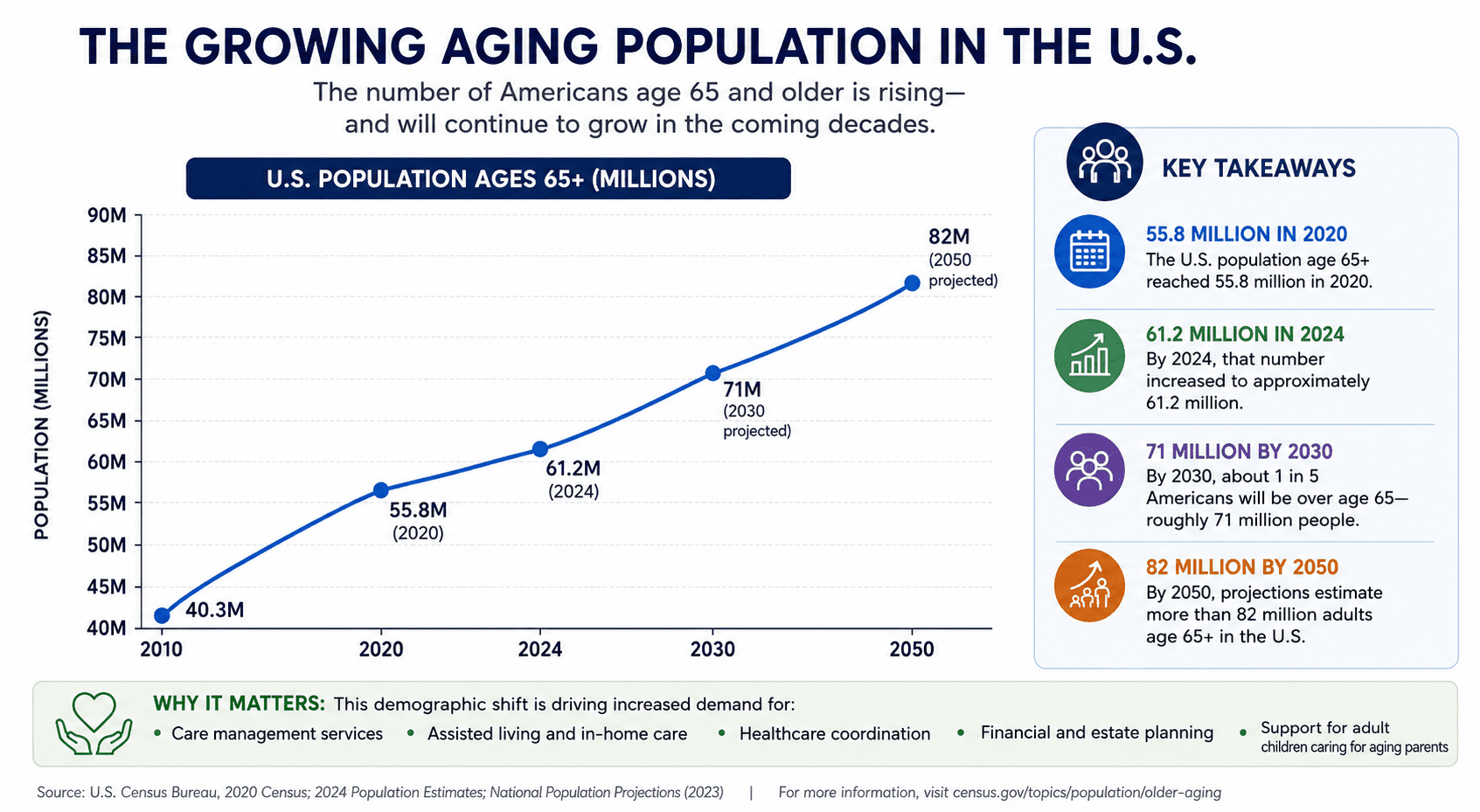
The United States is experiencing a significant demographic shift as the population of older adults continues to grow rapidly. According to national projections, millions of Americans are entering retirement age every year, creating new challenges for families navigating healthcare, finances, caregiving, and long-term planning. For many adult children, this means stepping into a new role — helping aging parents maintain their health, independence, and quality of life.
While aging is a natural part of life, many families are unprepared for the emotional, medical, and logistical responsibilities that can come with caring for older loved ones. Planning ahead can reduce stress, prevent crisis situations, and help aging adults remain safe and supported for as long as possible.
At Life Span Care Management, families receive professional guidance and advocacy to help navigate the complex realities of aging and long-term care. Below are five important things adult children should prepare for as their parents age.
1. Changes in Physical and Cognitive Health
One of the most common challenges families face is the gradual decline in physical or cognitive abilities. Aging adults may begin experiencing mobility limitations, chronic illnesses, memory concerns, medication complications, or difficulty managing daily routines independently.
Adult children often notice subtle warning signs first, including:
- Missed medical appointments
- Unpaid bills or financial confusion
- Difficulty preparing meals
- Increased falls or balance issues
- Forgetfulness or repeated conversations
- Isolation or depression
These changes may happen slowly over time, making them easy to overlook until a crisis occurs.
Working with a professional care manager can help families identify concerns early and create proactive care plans. Services like care coordination and aging life care services can help aging adults receive the proper medical support, home care resources, and wellness monitoring needed to maintain independence safely.
2. Understanding Healthcare and Medical Advocacy
The healthcare system can quickly become overwhelming for families. Coordinating between primary care doctors, specialists, hospitals, rehabilitation centers, insurance providers, and medications often becomes a full-time responsibility for adult children.
Many aging adults struggle to manage:
- Multiple medications
- Complex treatment plans
- Insurance paperwork
- Follow-up appointments
- Hospital discharge instructions
- Chronic disease management
Adult children frequently find themselves acting as healthcare advocates for their parents, especially during emergencies or hospitalizations.
Having professional guidance through geriatric care management services can help families better understand medical options, communicate with healthcare providers, and ensure aging adults receive consistent and appropriate care. Professional advocacy can also reduce caregiver burnout and improve overall outcomes for seniors.
3. Financial and Long-Term Care Planning
One of the biggest misconceptions about aging is assuming Medicare will cover all long-term care needs. In reality, many services such as assisted living, in-home caregivers, memory care, and long-term custodial support may require significant out-of-pocket expenses.
Adult children should begin discussing:
- Retirement savings
- Long-term care insurance
- Estate planning
- Power of attorney
- Healthcare directives
- Housing plans
- Monthly care costs
Waiting until a health emergency occurs can leave families scrambling to make difficult decisions under stress.
Families should also consider how caregiving responsibilities may impact their own work schedules, finances, and emotional health. Planning early allows families to evaluate available resources and build a sustainable support system before urgent care is needed.
Professional guidance from experienced aging care specialists can help families understand care options and develop personalized strategies based on their loved one’s health, goals, and financial situation.
4. Safety and Living Environment Concerns
As adults age, the home environment itself can become a major safety concern. Stairs, poor lighting, fall hazards, clutter, or inaccessible bathrooms can significantly increase the risk of injuries.
Some aging adults may resist accepting help or making home modifications because they fear losing independence. However, small adjustments can dramatically improve safety and quality of life while allowing seniors to remain at home longer.
Important safety considerations include:
- Fall prevention modifications
- Medication organization
- Transportation support
- Nutrition and meal planning
- Emergency response systems
- Home healthcare assistance
- Social interaction and companionship
Adult children often feel overwhelmed trying to evaluate these needs on their own. A professional assessment through Life Span Care Management services can help identify risks and recommend solutions tailored to each individual’s situation.
5. Emotional Wellbeing and Caregiver Burnout
Caring for aging parents can be emotionally challenging. Many adult children juggle careers, raising children, finances, and caregiving responsibilities simultaneously. This “sandwich generation” often experiences high levels of stress, anxiety, guilt, and exhaustion.
At the same time, aging adults may experience loneliness, grief, anxiety, or depression as they face health changes, reduced independence, or loss of social connections.
Families should remember that emotional health is just as important as physical health during the aging process.
Signs of caregiver burnout may include:
- Constant fatigue
- Irritability
- Anxiety or depression
- Difficulty balancing responsibilities
- Neglecting personal health
- Feeling overwhelmed or isolated
Seeking support is not a sign of failure — it is an important part of sustainable caregiving. Professional care management services can help reduce stress by coordinating care, connecting families with resources, and providing expert guidance during difficult decisions.
Planning Ahead Creates Better Outcomes
The growing aging population in the U.S. means more families than ever are navigating elder care responsibilities. While these transitions can feel overwhelming, preparation and support can make a significant difference in both the aging process.
Need Guidance Navigating Aging and Senior Care?
Caring for an aging parent can feel overwhelming, especially when managing healthcare decisions, safety concerns, and long-term planning. The right support can help your family make confident decisions while improving your loved one’s quality of life.
At Life Span CM, we provide compassionate care coordination, advocacy, and personalized support for aging adults and their families. Whether you are beginning to notice changes or need immediate assistance navigating senior care options, our experienced team is here to help.
Contact Life Span Care Management today to schedule a consultation and learn how professional care management can help support your family through every stage of aging.